
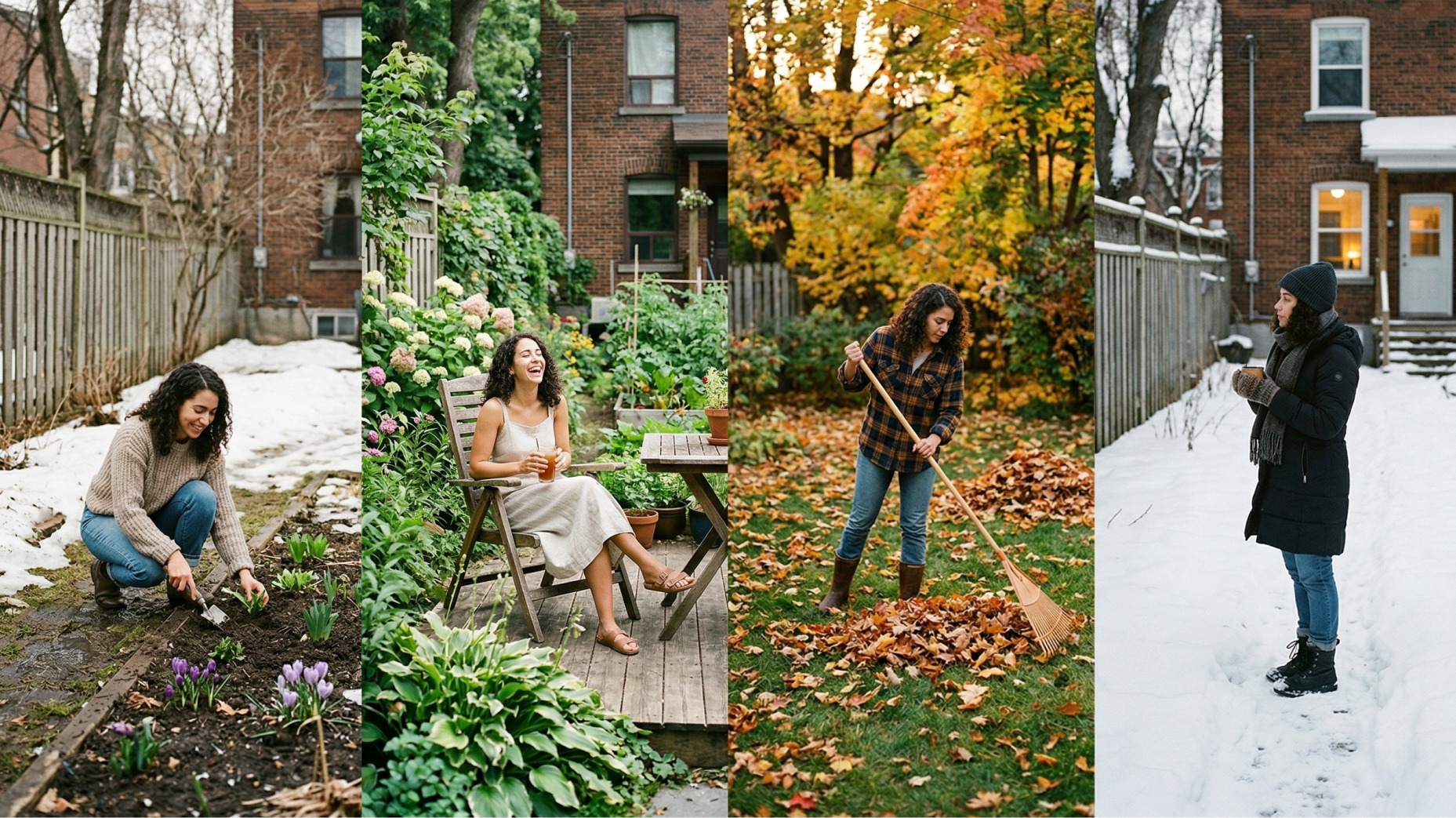
If you’ve ever watched your neighbor’s yard bounce back from winter looking pristine while yours resembles a muddy battlefield, you’re not alone. Living in Montreal means dealing with some of the most extreme seasonal shifts in North America. We go from -25C cold snaps in January to humid 30C days in July, and our landscapes take the full hit of every transition.
I’ve lived in the Greater Montreal area my whole life, and I’ve learned the hard way that timing is everything when it comes to yard work here. Miss your spring window by two weeks and you’re playing catch-up until fall.
So here’s what actually works, season by season, for Quebec homeowners who want a yard that holds up year-round.
Spring: The Recovery Season (April to Late May)
Spring in Montreal isn’t the gentle awakening you see in gardening magazines. It’s mud, salt residue, and the slow reveal of whatever winter did to your property. The snow melts to expose brown patches along your driveway, cracked pavers from frost heave, and flower beds that look like they went through a war.
Salt Damage Comes First
Montreal gets an average of 210 cm of snow per year, according to Environment Canada data. That means months of road salt getting sprayed onto your lawn edges.
You’ll see it as brown, crusty strips of dead grass along sidewalks and driveways.
The fix is straightforward:
- Deep watering with clean water over several days pushes the salt below the root zone
- About 15 cm of water reduces soil salinity by roughly half
- Follow that up with pelletized gypsum
- Keep watering weekly for three to four weeks
Watch for Frost Heave
Frost heave is the other big one. When water in the soil freezes and expands repeatedly, it pushes pavers, retaining walls, and stepping stones out of alignment.
Walk your property in April and check every hardscape element. Small shifts now become trip hazards by summer.
Know Your Planting Window
Montreal’s average last frost date falls around mid-May. That’s your green light for planting tender perennials and warm-season annuals.
Before that date, stick to cold-hardy tasks:
- Raking debris
- Aerating compacted soil
- Overseeding bare patches with a grass mix suited to zone 5b*(which is what most of the island falls under, according to Natural Resources Canada’s updated 2025 hardiness map)*
Your April–May Checklist
- Flush salt from lawn edges with deep watering
- Inspect hardscape for frost heave damage
- Rake thatch and debris once soil is dry enough to walk on without sinking
- Overseed bare patches after soil temperature hits 10C
- Book any professional landscaping work early, because crews fill up fast
Summer: Growth Mode (June to August)
This is when Montreal’s 157-day frost-free growing season really kicks in. You’ve got roughly five months of actual growing weather, and June through August is the peak.
The biggest mistake I see homeowners make is treating their Montreal yard like a yard in Virginia or North Carolina. Our growing season is shorter, and our summers pack intense heat with high humidity.
That combination means you need plants that can handle the heat but also survive what comes after.
Watering Matters More Than You Think
During July heat waves, lawns need about 2.5 cm of water per week, either from rain or irrigation.
Water early in the morning.
Evening watering in Montreal’s humid summers invites fungal problems, and you’ll spend September dealing with brown patch disease instead of enjoying your yard.
Summer Is Prime Time for Hardscape Projects
The ground is stable, the soil is workable, and there’s enough dry weather to let new installations cure properly.
If you’ve been thinking about a new patio, walkway, or retaining wall, this is your window.
Companies like Montreal Paysagement Pro handle everything from interlock pavers to drainage solutions for residential properties across the Greater Montreal area, and they can give estimates by phone or photo, which saves you the hassle of scheduling site visits during the busy season.
Summer Priorities
- Mow at 7–8 cm height to shade roots during heat waves
- Water deeply but infrequently (once or twice a week beats daily light sprinkles)
- Deadhead perennials to extend blooming
- Stay on top of weeds before they seed
- Tackle any hardscape projects you’ve been planning
Fall: The Setup for Next Year (September to November)
Fall in Montreal is gorgeous. The maples turn, the air crisps up, and it feels like the yard finally gets a break.
But this is actually the most important season for your landscape’s long-term health.
September Is Lawn Recovery Season
September is the best month to overseed your lawn in Quebec.
The soil is still warm from summer, but air temperatures are cooler, which means less stress on new grass. Seeds germinate quickly and establish strong roots before the ground freezes.
If you only do one lawn care task all year, make it fall overseeding.
Plant Trees and Shrubs Early
Plant trees and shrubs in early fall. They’ll focus energy on root development instead of leaf production, which gives them a head start for next spring.
Stick to species rated for zone 5b or lower.
Some parts of Montreal are now classified as zone 6a after the 2025 map update, but I’d still plant conservatively. One brutal January is all it takes to kill a borderline-hardy tree.
Don’t Waste Your Leaves
Montreal’s urban tree canopy means mountains of leaves in October.
Don’t just blow them to the curb.
Instead:
- Mulch them into your lawn with a mower
- Rake them onto garden beds as natural insulation
A 10–15 cm layer of shredded leaves protects perennial roots through winter and breaks down into free compost by spring.
Protect Vulnerable Plants Before Winter
Late fall is also when you should protect vulnerable plants.
- Wrap young tree trunks with tree guard to prevent frost cracking
- Burlap screen any broadleaf evergreens that face prevailing winter winds
- Cut back perennials that are prone to disease (like peonies and hostas)
- Leave ornamental grasses standing for winter interest
They look great with snow on them and add structure to the landscape during the colder months.
Fall Action Items
- Overseed and fertilize the lawn in September
- Plant trees and shrubs before the ground freezes (usually late October in Montreal)
- Mulch leaves into beds or compost them
- Protect young trees and vulnerable evergreens
- Do a final mow at a slightly shorter height (5–6 cm) in late October
- Drain and winterize irrigation systems before the first hard freeze
Winter: Protect and Plan (December to March)
Winter is where Montreal separates itself from most of Canada’s landscaping conversation.
The cold here is sustained and deep, with heavy snow loads on top of it. Average January temperatures drop to about -9C, and cold snaps can push well below -25C.
Your Main Job in Winter
Your job in winter is simple: don’t make things worse.
The biggest winter landscaping damage is often self-inflicted.
For example, piling snow from your driveway onto the same garden bed every time creates a concentrated salt dump that kills everything underneath.
Try to:
- Spread snow piles around when you can
- Avoid stacking snow against tree trunks
Choose Better De-Icing Products
If you use de-icing products on your walkways, switch from rock salt (sodium chloride) to:
- Calcium chloride
- Magnesium chloride
They’re less toxic to plants and work at lower temperatures, which matters when it’s -20C outside.
Winter Is Planning Season
Winter is also your best time to review what worked and what didn’t.
Ask yourself:
- Did one corner of the yard stay soggy all spring?
- Did your front walkway shift again?
- Are your patio pavers cracking?
These observations are gold when you’re ready to invest in upgrades.
Winter Reminders
- Spread snow piles to avoid concentrated salt damage
- Use plant-friendly de-icing products
- Brush heavy snow off shrubs and small trees gently (don’t shake frozen branches)
- Document problem areas while they’re visible
- Start planning spring projects in February so you’re first in line
The Honest Truth About Montreal Landscaping
Quebec’s climate is demanding. There’s no shortcut around that.
But homeowners who work with the seasons instead of against them end up with properties that look great and hold their value.
Research published in The Journal of Real Estate Finance and Economics found that homes with strong curb appeal sell for an average of 7% more than comparable properties in the same neighborhood.
In a Montreal housing market where prices have climbed steadily, that’s real money.
The key is consistency.
A little work each season beats a massive overhaul every few years.
And when a project is too big to tackle yourself, getting a professional quote doesn’t cost anything. Most residential landscaping companies in the Montreal area are happy to give estimates over the phone or based on photos you send.
Your yard is going to face four very different seasons every single year.
The good news?
Once you learn the rhythm, it gets easier.
And when the snow finally melts next April, you’ll actually be ready for it.